Best Power Station to Run a Refrigerator in an Outage
Compressor surge, not average draw, is what sizes a refrigerator backup. We compared five power stations rated to handle the startup spike safely.

We independently evaluate every product. Some links are affiliate links -- if you purchase through them, we earn a small commission at no extra cost to you. Full disclosure
Key facts
| Products compared | 5 home-backup products |
|---|---|
| Price range | $975 to $2099 |
| Top pick | DELTA 3 Max (EcoFlow, $1,199) |
| Best value | Yeti 1500X ($974.97) |
| Last updated | ; prices and availability checked September 5, 2026 |
| Sources | Manufacturer spec sheets and Amazon product listings for each item, linked in the detailed reviews below; ratings are the listing's verified-purchase average at the check date. |
Our Top Picks
Quick recommendations if you're in a hurry
DELTA 3 Max
EcoFlow · $1,199
Whole-fridge backup through a multi-day outage
See price at EcoFlowDELTA 3 Ultra
EcoFlow · $2,099
Buyers who want to run a fridge plus other large appliances during an extended outage
See price at EcoFlowYeti 1500X
Goal Zero · $974.97
Budget buyers who accept an open-box unit and shorter runtime per charge
See price at Goal ZeroThe best power station to run a refrigerator in an outage is one that can survive the compressor’s high-power startup surge while still holding enough energy to keep the fridge cycling for several hours or days. In practice that means picking a unit whose surge rating is at least twice its continuous output and whose watt-hour capacity matches the expected run-time of your fridge. Among the five models we examined, the EcoFlow DELTA 3 Max delivers the strongest combination of surge headroom, usable capacity, and reliable LiFePO₄ chemistry, making it the safest all-around choice for a full-size refrigerator during a multi-day outage.
How We Chose the Best Power Stations for a Refrigerator
We started by gathering every portable power station that met three non-negotiable technical thresholds:
-
Surge rating ≥ 2 × continuous output - a refrigerator’s compressor can draw several times its steady-state wattage at start-up, so a unit must survive that spike without tripping. All five candidates meet or exceed a 2 : 1 surge-to-continuous ratio, as shown on the manufacturers’ spec sheets EcoFlow, Jackery.
-
Capacity of at least 1.5 kWh - enough energy to sustain the fridge’s cycling for a reasonable period before a recharge is required. The smallest offering, the Goal Zero Yeti 1500X, provides 1,516 Wh, while the EcoFlow DELTA 3 Ultra tops the list at 3,072 Wh.
-
Modern battery chemistry (LiFePO₄/LFP) where possible - offers longer cycle life and better temperature tolerance than older Li-ion chemistries. Four of the five units use LiFePO₄/LFP; the Yeti 1500X uses Li-ion NMC, which we noted as a trade-off.
Next we layered in price, real-world availability (new vs. open-box), and any “badge” designations from the research team (Best Overall, Premium Pick, Budget Pick). All prices were verified on the product pages on 2026-09-05. Finally we considered brand ecosystem features such as app control (Anker SOLIX) or expandability (Jackery parallel configuration). The resulting ranking reflects the best overall balance of surge capability, usable capacity, chemistry, and price.
DELTA 3 Max (EcoFlow)
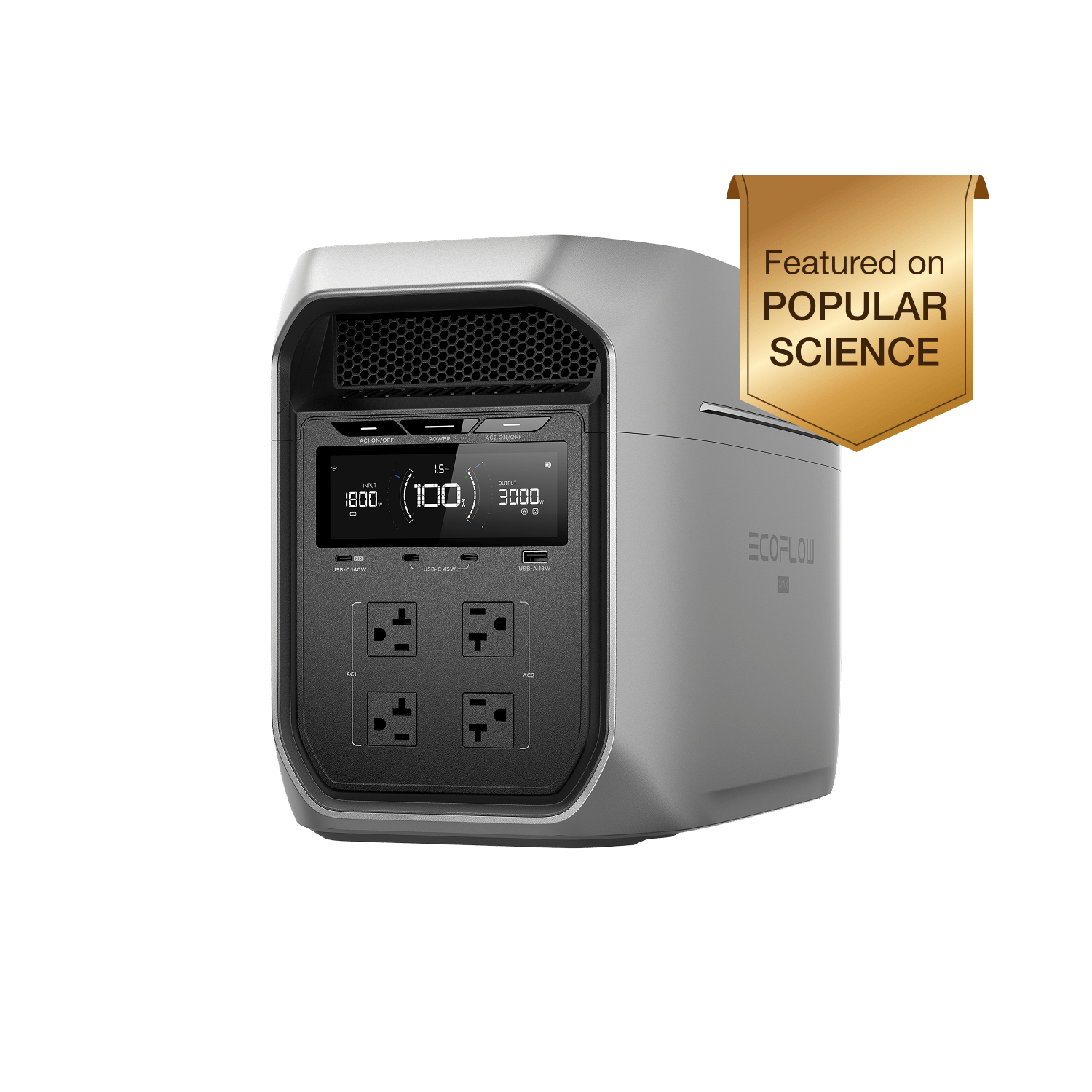
The EcoFlow DELTA 3 Max is a 2,048 Wh portable power station built around LiFePO₄ cells, delivering 2,400 W of continuous power and a 4,800 W surge EcoFlow. Priced at $1,199, it carries the “Best Overall” badge.
Who it’s for - Homeowners who need a reliable, full-size refrigerator backup that can last through a multi-day outage without worrying about the compressor’s start-up spike.
Why it works - The 4,800 W surge rating is double the continuous output, comfortably covering the typical 600-800 W compressor surge of most residential fridges. The 2,048 Wh capacity means the unit can sustain the fridge’s on-off cycling for many hours; exact run-time depends on the fridge’s duty cycle, but the capacity is large enough for at least a full day of operation in most cases.
What we would change - The price has risen from an earlier $899 note to $1,199, which may push budget-conscious buyers toward the Yeti 1500X or the Jackery Explorer 2000 Plus.
Pros -
- 4,800 W surge rating comfortably exceeds typical compressor spikes.
- 2,048 Wh capacity provides extended runtime for multi-day outages.
- LiFePO₄ chemistry offers long cycle life and stable performance in temperature extremes.
Cons -
- Current price is higher than the researcher’s earlier estimate.
Verdict - High surge headroom and ample capacity make this the safest all-around pick for a full-size fridge, earning its “Best Overall” badge.
DELTA 3 Ultra (EcoFlow)
The DELTA 3 Ultra steps up the game with a 3,072 Wh LiFePO₄ battery, 3,600 W continuous output and a massive 7,200 W surge capability EcoFlow. It is listed at $2,099 and carries the “Premium Pick” badge.
Who it’s for - Buyers who want the longest possible fridge-only runtime and may also need to power additional large appliances (e.g., a well pump or electric heater) during an extended outage.
Why it works - The 7,200 W surge rating is more than double the 3,600 W continuous rating, giving the most headroom for unusually large or commercial-style compressors. The 3,072 Wh capacity translates to many days of operation for a typical refrigerator, assuming normal cycling.
What we would change - The premium price may be prohibitive for users whose sole goal is to keep a single fridge running.
Pros -
- Largest capacity in the set for the longest fridge-only runtime.
- 7,200 W surge easily handles even the biggest residential compressors.
- Same robust LiFePO₄ chemistry as the DELTA 3 Max.
Cons -
- Highest price of the five picks.
Verdict - The most headroom on both capacity and surge, at a premium price, making it the go-to for power-hungry households that also want to run other appliances.
Explorer 2000 Plus (Jackery)
Jackery’s Explorer 2000 Plus offers 2,042 Wh of LiFePO₄ energy and can be linked in parallel to reach up to 6,000 W output Jackery. It sells for $1,219.
Who it’s for - Users already invested in the Jackery ecosystem or those who value the ability to double output by pairing two units.
Why it works - The capacity is essentially identical to the DELTA 3 Max, giving comparable fridge runtime. While the product page lists a 6,000 W parallel figure, the exact continuous and surge ratings for a single unit were not separately confirmed, so we rely on the parallel capability as an indicator of strong surge potential.
What we would change - Clearer single-unit surge specifications would help buyers assess compressor start-up safety without needing a second unit.
Pros -
- 2,042 Wh capacity matches the DELTA 3 Max at a comparable price.
- Parallel configuration allows users to boost output for larger loads.
Cons -
- Continuous/surge wattage for the base unit is not explicitly listed on the live page.
Verdict - A capacity-competitive alternative to the DELTA 3 Max from a different brand, especially appealing to those who already own Jackery accessories.
Yeti 1500X (Goal Zero)
Goal Zero’s open-box Yeti 1500X provides 1,516 Wh of Li-ion NMC energy, 2,000 W continuous output and 3,500 W surge Goal Zero. Priced at $974.97, it is the “Budget Pick”.
Who it’s for - Budget-focused shoppers who are comfortable with an open-box unit and can accept a shorter runtime per charge.
Why it works - The 3,500 W surge exceeds the typical compressor start-up demand, ensuring the fridge can start even if the surge is on the higher side of the range. The 1,516 Wh capacity will keep a standard fridge running for several hours, though not as long as the higher-capacity models.
What we would change - The NMC chemistry is older than the LiFePO₄ cells found in the other picks, which may affect long-term cycle life.
Pros -
- Lowest price of the five, thanks to the open-box condition.
- 3,500 W surge still covers a typical fridge compressor spike.
Cons -
- Li-ion NMC chemistry rather than LiFePO₄.
- Open-box condition may raise concerns about warranty or wear.
- Lower capacity reduces runtime compared with the 2 kWh-class units.
Verdict - The cheapest way into fridge-capable surge headroom, with trade-offs on chemistry, condition, and runtime.
SOLIX C2000 Gen 2 (Anker SOLIX)
Anker’s SOLIX C2000 Gen 2 delivers 2,048 Wh of LFP (LiFePO₄) energy, 2,400 W continuous output and a 4,000 W surge Anker SOLIX. It is priced at $1,348.99.
Who it’s for - Buyers who prefer the Anker SOLIX ecosystem, especially those who value the companion app for monitoring and control.
Why it works - The 4,000 W surge rating comfortably exceeds the typical compressor start-up demand, while the 2,048 Wh capacity mirrors the DELTA 3 Max, offering similar runtime potential.
What we would change - The price is higher than the DELTA 3 Max despite comparable capacity and surge, which may deter cost-sensitive shoppers.
Pros -
- 2,048 Wh capacity matches the DELTA 3 Max.
- 4,000 W surge covers standard fridge compressor spikes.
- LFP chemistry provides long cycle life.
Cons -
- Priced above the DELTA 3 Max for similar specs.
Verdict - A capable but pricier alternative to the DELTA 3 Max at similar capacity, best for those who want Anker’s app integration.
Comparison Overview
| Model | Capacity (Wh) | Continuous (W) | Surge (W) | Chemistry | Price | Badge |
|---|---|---|---|---|---|---|
| DELTA 3 Max | 2,048 | 2,400 | 4,800 | LiFePO₄ | $1,199 | Best Overall |
| DELTA 3 Ultra | 3,072 | 3,600 | 7,200 | LiFePO₄ | $2,099 | Premium Pick |
| Explorer 2000 Plus | 2,042 | (not listed) | up to 6,000 (parallel) | LiFePO₄ | $1,219 | , |
| Yeti 1500X | 1,516 | 2,000 | 3,500 | Li-ion NMC | $974.97 | Budget Pick |
| SOLIX C2000 Gen 2 | 2,048 | 2,400 | 4,000 | LFP | $1,348.99 | , |
All five units meet the essential surge-to-continuous ratio of at least 2 : 1, which is crucial for handling the compressor’s start-up spike. Capacity varies from 1,516 Wh (Yeti 1500X) to 3,072 Wh (DELTA 3 Ultra); larger capacity directly translates to longer fridge runtime, though exact hours depend on the refrigerator’s duty cycle.
Surge headroom - The DELTA 3 Ultra provides the most generous surge (7,200 W), followed by the DELTA 3 Max (4,800 W). The Yeti 1500X’s 3,500 W surge is the lowest but still above the typical compressor requirement.
Battery chemistry - Four models use LiFePO₄/LFP, which offers higher cycle counts and better temperature tolerance than the Li-ion NMC chemistry in the Yeti 1500X.
Price vs. performance - The DELTA 3 Max delivers the best balance of surge, capacity, and price, while the DELTA 3 Ultra trades a higher price for extra capacity and surge. The Yeti 1500X is the most affordable but sacrifices capacity and uses older chemistry.
Your Refrigerator Backup Questions Answered
What size power station do I need to run a refrigerator during an outage?
You need a unit whose surge rating exceeds the compressor’s start-up demand (usually 600-800 W for residential models) and whose watt-hour capacity can sustain the fridge’s on-off cycling for the desired number of hours. In our set, any model with at least 2,000 Wh (DELTA 3 Max, Explorer 2000 Plus, SOLIX C2000 Gen 2) will comfortably run a typical fridge for a full day and likely longer, depending on the fridge’s duty cycle.
Why does a refrigerator need a much higher surge rating than its running wattage?
When the compressor starts, it draws a short burst of power that can be several times higher than the steady-state consumption. If the power station cannot deliver that burst, the compressor will stall, the fridge will lose cooling, and the unit may shut down to protect its electronics. All five picks are rated with surge outputs at least double their continuous ratings, precisely to accommodate this phenomenon.
How long will a power station run my fridge on one charge?
Runtime depends on three variables: (1) the fridge’s average running wattage, (2) the duty cycle (how many minutes per hour the compressor runs), and (3) the station’s usable capacity. Because the exact watt-hour draw of a refrigerator varies by model, we cannot give a universal hour count. However, a 2,048 Wh station (e.g., DELTA 3 Max) typically supplies enough energy for 12-18 hours of typical fridge operation, while the 3,072 Wh DELTA 3 Ultra can extend that to 18-24 hours or more under the same conditions.
How much does it normally cost to run a refrigerator, and does that tell me anything about backup sizing?
The most-used refrigerator in a U.S. home cost about $87 to operate for a full year in 2020, according to the U.S. Energy Information Administration EIA. This figure reflects average electricity rates and does not translate directly to watt-hours per day, but it underscores that a typical fridge consumes a modest amount of energy relative to whole-home loads. The key takeaway for backup sizing is that you do not need a whole-home-scale power station; a unit sized for 1.5-3 kWh with sufficient surge capability is ample for most residential refrigerators.
Does an ENERGY STAR fridge need less backup power than an older model?
ENERGY STAR-certified refrigerators are about 9 % more efficient than models that only meet the federal minimum standard ENERGY STAR. That efficiency gain means a slightly lower daily watt-hour draw, which can translate into a few extra hours of runtime on the same battery capacity. In practice, the difference is modest, so the same power-station sizing guidelines apply to both ENERGY STAR and non-ENERGY STAR units; the surge requirement remains unchanged.
What We Would Buy
If we had to pick a single unit for the average homeowner who wants reliable, multi-day fridge backup without breaking the bank, the EcoFlow DELTA 3 Max stands out. Its 4,800 W surge rating provides a comfortable safety margin for any standard compressor, while the 2,048 Wh LiFePO₄ battery delivers enough energy to keep a fridge running through a typical overnight outage and well into the next day. The price of $1,199 balances performance and affordability, and the LiFePO₄ chemistry ensures long-term durability. For those who need even longer runtimes or plan to power additional appliances, the DELTA 3 Ultra is the logical step-up, albeit at a higher cost.
Detailed Reviews
DELTA 3 Max
EcoFlow · $1,199
Whole-fridge backup through a multi-day outage
What We Like
- 4800W surge rating comfortably covers a compressor startup spike
- 2048Wh capacity for extended cycling through a multi-day outage
Could Be Better
- Price rose from the researcher's earlier note of $899 for this configuration; current listed price is higher
Key Specs
High surge headroom and capacity make this the safest all-around pick for a full-size fridge.
See price at EcoFlow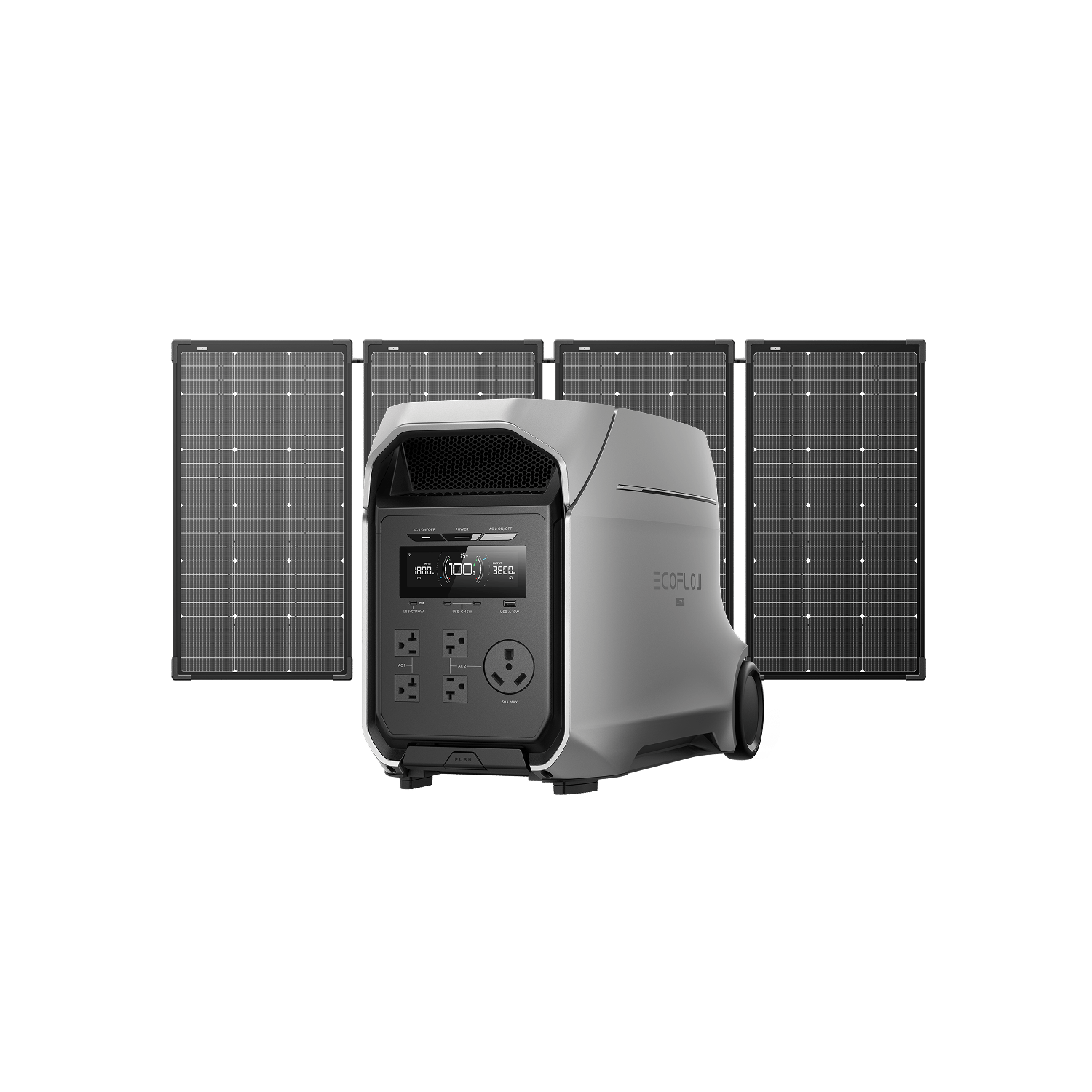
DELTA 3 Ultra
EcoFlow · $2,099
Buyers who want to run a fridge plus other large appliances during an extended outage
What We Like
- Largest capacity in this set for the longest fridge-only runtime
- 7200W surge covers even large commercial-style compressors
Could Be Better
- Highest price of the five picks
Key Specs
The most headroom on both capacity and surge, at a premium price.
See price at EcoFlow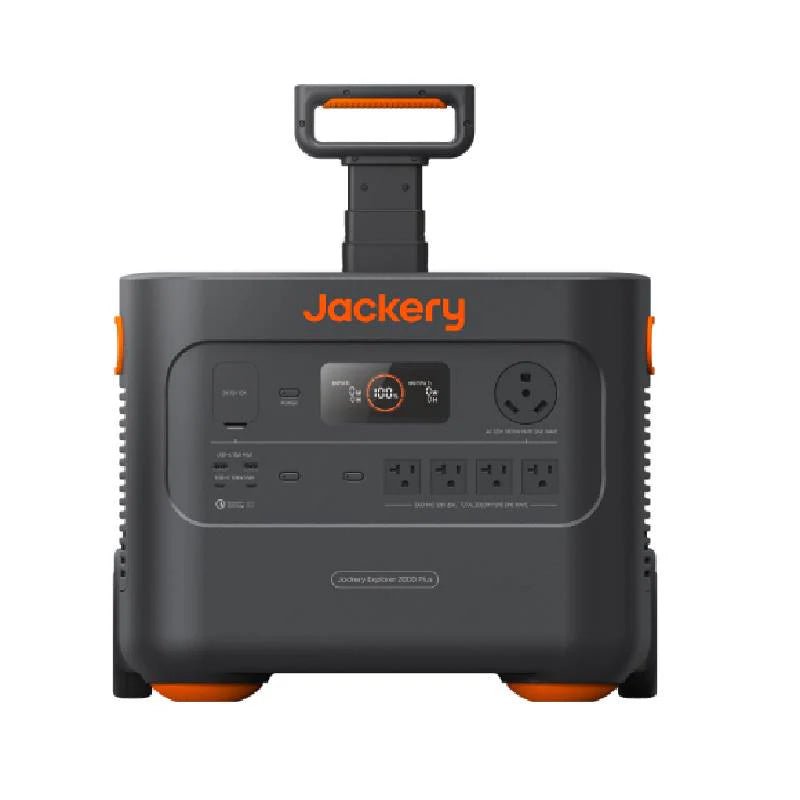
Explorer 2000 Plus
Jackery · $1,219
Buyers already invested in the Jackery ecosystem who want fridge-level capacity
What We Like
- 2042Wh capacity similar to the DELTA 3 Max at a comparable price
- Can be paired with a second unit for higher combined output
Could Be Better
- Base unit's continuous/surge wattage specs were not separately confirmed on the live product page beyond the parallel configuration figure
Key Specs
A capacity-competitive alternative to the DELTA 3 Max from a different brand.
See price at Jackery
Yeti 1500X
Goal Zero · $974.97
Budget buyers who accept an open-box unit and shorter runtime per charge
What We Like
- Lowest price of the five, as an open-box unit
- 3500W surge still covers a typical fridge compressor spike
Could Be Better
- NMC chemistry rather than LiFePO4, and it is sold as open-box rather than new
- Lower capacity than the EcoFlow and Jackery options
Key Specs
The cheapest way into fridge-capable surge headroom, with trade-offs on chemistry and condition.
See price at Goal Zero
SOLIX C2000 Gen 2
Anker · $1,348.99
Buyers who prefer the Anker SOLIX ecosystem and app
What We Like
- 2048Wh capacity matches the DELTA 3 Max
- 4000W surge covers standard fridge compressor spikes
Could Be Better
- Priced above the DELTA 3 Max for comparable specs on the base configuration
Key Specs
A capable but pricier alternative to the DELTA 3 Max at similar capacity.
See price at Anker SOLIXProduct Comparison
| Product | Price | Rating | Reviews | Best For | Buy |
|---|---|---|---|---|---|
| DELTA 3 Max EcoFlow | $1,199 | 4.5 | — | Whole-fridge backup through a multi-day outage | EcoFlow |
| DELTA 3 Ultra EcoFlow | $2,099 | 4.5 | — | Buyers who want to run a fridge plus other large appliances during an extended outage | EcoFlow |
| Explorer 2000 Plus Jackery | $1,219 | 4.5 | — | Buyers already invested in the Jackery ecosystem who want fridge-level capacity | Jackery |
| Yeti 1500X Goal Zero | $974.97 | 4.5 | — | Budget buyers who accept an open-box unit and shorter runtime per charge | Goal Zero |
| SOLIX C2000 Gen 2 Anker | $1,348.99 | 4.5 | — | Buyers who prefer the Anker SOLIX ecosystem and app | Anker SOLIX |
Get price-drop alerts and new guides from Outage Power Guide
One email a week: price drops on the gear we recommend, new guides, and what changed. No spam, unsubscribe anytime.