Best Portable Power Station Overall in 2026: 5 Verified Picks
We verified live prices and full specs on EcoFlow, Anker, Jackery, and Goal Zero units to find the best overall portable power station in 2026.

We independently evaluate every product. Some links are affiliate links -- if you purchase through them, we earn a small commission at no extra cost to you. Full disclosure
Key facts
| Products compared | 5 power-stations products |
|---|---|
| Price range | $650 to $1399 |
| Top pick | DELTA 3 Max Series Portable Power Station (2048Wh) (EcoFlow, $899) |
| Best value | Anker SOLIX S2000 Portable Power Station ($649.99) |
| Last updated | ; prices and availability checked September 5, 2026 |
| Sources | Manufacturer spec sheets and Amazon product listings for each item, linked in the detailed reviews below; ratings are the listing's verified-purchase average at the check date. |
Our Top Picks
Quick recommendations if you're in a hurry
DELTA 3 Max Series Portable Power Station (2048Wh)
EcoFlow · $899
Buyers who want the highest continuous wattage for the money in the 2kWh class
See price at EcoFlowDELTA 3 Ultra Series Portable Power Station (3072Wh)
EcoFlow · $1,399
Buyers who need to run large appliances (well pump, central AC) during an outage
See price at EcoFlowAnker SOLIX S2000 Portable Power Station
Anker SOLIX · $649.99
Buyers who want the most capacity per dollar and don't need to expand later
See price at Anker SOLIXThe best portable power station overall in 2026 is the EcoFlow DELTA 3 Max. At a live sale price of $899 it delivers a massive 2048 Wh capacity, 2400 W continuous output and 4800 W surge power, all backed by a long-life LiFePO₄ battery. Compared with the other contenders, it offers the highest continuous wattage for the money in the 2 kWh class, while still providing an expansion path to 4 kWh. In short, if you need reliable, high-output backup for essential appliances and want a unit that won’t become obsolete quickly, the DELTA 3 Max is the clear overall winner.
How we chose the winners
We started by pulling the latest 2026 specifications and live prices directly from each manufacturer’s product page on the date of verification (2026-09-05). The key criteria were:
- Capacity - enough stored energy to run critical loads for several hours.
- Continuous and surge wattage - ability to handle start-up spikes of appliances such as refrigerators, well pumps or window AC units.
- Battery chemistry - LiFePO₄/LFP versus NMC, with cycle-life numbers taken from each maker’s spec sheet.
- Expandability - whether the unit can grow beyond its base capacity.
- Weight and portability - practical handling for indoor moves or outdoor use.
- Price - live, verified price at the time of research, not a list price or estimate.
All units were also confirmed to meet the UL 2743 safety standard for portable power packs UL 2743. Bluetti’s pricing could not be verified because it renders client-side via JavaScript, so no Bluetti model appears in this guide , you’ll need to check the Bluetti website directly for current pricing.
DELTA 3 Max Series Portable Power Station (2048 Wh) - EcoFlow
The DELTA 3 Max sits at the top of our list thanks to its blend of capacity, output and price. With a 2048 Wh LiFePO₄ battery, it can keep a medium-size refrigerator running for roughly 12 hours, or power a 1500 W electric heater for about 1.5 hours EcoFlow. Its 2400 W continuous output (and 4800 W surge, 3400 W via X-Boost) comfortably handles the start-up draw of most large appliances, from well pumps to window AC units.
Who it’s for - Buyers who want the highest continuous wattage for the money in the 2 kWh class, especially those who may need to run a single large appliance during an outage.
What we would change - The unit weighs 20.3 kg, making it the heaviest among the 2 kWh-class options. A lighter chassis would improve portability, but the trade-off for LiFePO₄ durability is understandable.
Pros
- 2400 W continuous output covers most single large appliances.
- LiFePO₄ chemistry is rated for thousands of cycles, far outlasting NMC cells.
- Expandable with the Max Plus add-on battery to 4 kWh, giving future growth.
Cons
- At 20.3 kg, it is heavy to move between rooms.
- The live sale price of $899 is a discount from the list price of $1,199, so the price could rise when the promotion ends.
Verdict - The best balance of capacity, output and current price in the category, making it the overall pick for 2026.
DELTA 3 Ultra Series Portable Power Station (3072 Wh) - EcoFlow
The DELTA 3 Ultra pushes the envelope with a 3072 Wh LiFePO₄ pack and a staggering 3600 W continuous output (up to 7200 W surge, 4600 W via X-Boost) EcoFlow. This power level can start a central air-conditioning unit or a well pump without a hiccup, and the unit can be expanded to 11 kWh using Ultra Plus add-on batteries, the highest capacity ceiling in our comparison.
Who it’s for - Buyers who need to run multiple large appliances, such as a well pump and a central AC, or who simply want the most headroom possible and have the budget to support it.
What we would change - The $1,399 price tag makes it the most expensive unit in this roundup. For users whose outage needs are modest, the extra capacity may be unnecessary.
Pros
- 3600 W continuous output handles the toughest start-up loads.
- Expandable to 11 kWh, the largest total capacity available here.
- LiFePO₄ chemistry ensures long-term durability.
Cons
- Highest price at $1,399.
- The 3072 Wh capacity may be overkill for users who only need to power a few devices.
Verdict - The most headroom in the lineup if the budget allows for it, ideal for heavy-duty backup scenarios.
Anker SOLIX S2000 Portable Power Station - Anker SOLIX
The SOLIX S2000 offers a 2010 Wh LFP battery (314 Ah cells) with 1500 W continuous and 3000 W surge output Anker SOLIX. At $649.99, it undercuts similarly sized EcoFlow and Jackery units by several hundred dollars, delivering the best price-to-capacity ratio in this guide. Its battery is rated for 6,000 cycles to 80 % capacity and 10,000 cycles to 60 %, according to Anker’s own spec table, making it one of the longest-lasting cells on the market. However, the unit is not expandable, a limitation highlighted in Anker’s compare-specs table.
Who it’s for - Buyers who want the most capacity per dollar and do not need the ability to add extra battery modules later.
What we would change - The 1500 W continuous output limits the ability to run higher-draw appliances such as larger window AC units or space heaters. An increased output rating would broaden its appeal.
Pros
- Low price of $649.99 for a 2 kWh battery.
- 10,000-cycle LFP battery promises exceptional longevity.
- Lighter than the Goal Zero Yeti 1500X at a similar capacity.
Cons
- No expandability; capacity is fixed at 2010 Wh.
- 1500 W continuous output may not support some high-draw devices.
Verdict - The best price-to-capacity ratio here, perfect for users who value upfront savings and long battery life over expandability.
Yeti 1500X (Open Box) - Goal Zero
The Yeti 1500X open-box model provides 1516 Wh of Li-ion NMC capacity with 2000 W continuous and 3500 W surge output Goal Zero. Priced at $974.97 after a 35 % open-box discount off the $1,499.95 list price, it offers a solid mid-range option for budget-conscious shoppers. However, its NMC chemistry is rated for only 500 cycles to 80 % capacity, far below the 3,000-plus cycles of the LiFePO₄/LFP units in this guide. At 45.64 lb, it is the heaviest unit we evaluated.
Who it’s for - Buyers comfortable with an open-box condition and willing to trade long-term cycle life for a lower price point.
What we would change - The limited cycle life of the NMC cells is a drawback for users who expect many charge-discharge cycles over the product’s lifespan. A LiFePO₄ version would align better with the durability of the other models.
Pros
- Significant open-box discount makes it the cheapest high-capacity unit with 2000 W continuous output.
- 2000 W continuous rating is sufficient for most essential home appliances.
Cons
- NMC chemistry rated for only 500 cycles to 80 % capacity, compared with 6,000-10,000+ cycles for LiFePO₄/LFP units.
- Heaviest unit at 45.64 lb.
- Open-box stock is limited; condition can vary between units.
Verdict - A real discount, but the only NMC holdout in a field of LiFePO₄/LFP units, know what you’re trading for the price.
Jackery Explorer 2000 Plus Portable Power Station - Jackery
Jackery’s Explorer 2000 Plus ships with a 2042 Wh LiFePO₄ battery and advertises up to 6000 W output when two units are paralleled Jackery. As a standalone unit, the continuous output is not explicitly listed, but the product page emphasizes the parallel-scaling capability, making it attractive for users already invested in the Jackery ecosystem. Priced at $1,219 after a live discount from the $1,429 list price, it sits between the EcoFlow DELTA 3 Max and the DELTA 3 Ultra in cost.
Who it’s for - Buyers who already own or plan to own multiple Jackery units and want a flagship model that can be combined for higher power demands.
What we would change - The need for a second unit to reach the advertised 6000 W output adds cost and complexity for users who only need a single high-output station. Clearer standalone continuous output specs would help buyers compare directly.
Pros
- LiFePO₄ chemistry ensures long cycle life.
- Parallel capability allows scaling up to 6000 W for heavy loads.
- Live discount brings price down to $1,219.
Cons
- More expensive than the EcoFlow DELTA 3 Max at a similar capacity.
- The high-output figure requires a second unit; standalone power is lower.
Verdict - A solid flagship pick if brand ecosystem and parallel-unit scaling matter more than upfront price.
Comparison at a glance
| Rank | Model | Capacity | Continuous (W) | Surge (W) | Chemistry | Expandable? | Weight | Live Price (USD) |
|---|---|---|---|---|---|---|---|---|
| 1 | EcoFlow DELTA 3 Max | 2048 Wh | 2400 | 4800 (3400 W X-Boost) | LiFePO₄ | Yes, to 4 kWh | 20.3 kg | $899 |
| 2 | EcoFlow DELTA 3 Ultra | 3072 Wh | 3600 | 7200 (4600 W X-Boost) | LiFePO₄ | Yes, to 11 kWh | - | $1,399 |
| 3 | Anker SOLIX S2000 | 2010 Wh | 1500 | 3000 | LFP | No | 35.7 lb | $649.99 |
| 4 | Goal Zero Yeti 1500X (Open Box) | 1516 Wh | 2000 | 3500 | NMC | No | 45.64 lb | $974.97 |
| 5 | Jackery Explorer 2000 Plus | 2042 Wh | - (standalone) | - (standalone) | LiFePO₄ | Yes, via parallel unit | - | $1,219 |
All units meet the UL 2743 safety standard for portable power packs, ensuring they have passed industry-recognized electrical and fire-safety testing.
Buyer questions answered
1. What’s the difference between LiFePO₄/LFP and NMC batteries in a power station?
LiFePO₄ (also called LFP) chemistry, used by EcoFlow, Anker and Jackery, offers far higher cycle life, often 6,000-10,000+ cycles before capacity drops to 80 % Anker SOLIX. NMC (used by Goal Zero’s Yeti 1500X) provides a higher energy density but is rated for only 500 cycles to 80 % capacity Goal Zero. For users who expect many charge-discharge cycles over years, LiFePO₄/LFP is the more durable choice.
2. Do I need an expandable power station, or is a fixed-capacity unit enough?
Expandability matters if you anticipate growing power needs, e.g., adding a second battery to run a home workshop or a longer outage period. The EcoFlow DELTA 3 Max and Ultra, as well as the Jackery Explorer 2000 Plus (via parallel units), let you increase stored energy beyond the base capacity. If your outage plan covers only a few essential devices for a day or two, a fixed-capacity unit like the Anker SOLIX S2000 is simpler and cheaper.
3. How much continuous wattage do I need to run a fridge or window AC during an outage?
A typical modern refrigerator draws 100-200 W running and up to 600 W during start-up. A small window AC unit usually requires 900-1500 W continuous and a higher surge for the compressor start. Therefore, a unit with at least 1500 W continuous output (like the Anker SOLIX S2000) can handle a fridge and a modest AC, while the DELTA 3 Max’s 2400 W gives extra headroom for larger AC units or additional appliances.
4. Is an open-box power station a safe way to save money?
Open-box units are typically brand-new items returned for minor cosmetic reasons, sold at a discount. The Goal Zero Yeti 1500X open-box model is 35 % off the new price and still meets UL 2743 safety standards Goal Zero. However, the trade-off includes a shorter cycle life (NMC chemistry) and the possibility of varying condition between units. If you’re comfortable with a slightly reduced warranty and the lower cycle count, an open-box purchase can be a sensible way to stretch your budget.
5. Why isn’t a Bluetti model included in this comparison?
Bluetti’s current-generation pricing is rendered client-side via JavaScript, which means we could not fetch a reliable price with a direct server request. Because we only list products with verified live prices, Bluetti was omitted from this guide , you’ll need to visit Bluetti’s website directly for the most up-to-date pricing information.
What we would buy
If we had to pick a single unit for a typical family home that wants to keep a refrigerator, a few lights, a laptop and a small window AC running during a grid outage, the EcoFlow DELTA 3 Max delivers the most balanced package. Its 2400 W continuous output comfortably exceeds the combined draw of those loads, the 2048 Wh capacity gives multiple hours of runtime, and the LiFePO₄ chemistry promises a long service life. The price of $899 (a live discount from the $1,199 list) makes it the most cost-effective high-output choice, and the optional Max Plus battery provides a clear upgrade path if future needs grow.
For users whose priority is pure value per watt-hour and who don’t need expandability, the Anker SOLIX S2000 remains the best-priced option at $649.99. And for those already invested in the Jackery ecosystem, the Explorer 2000 Plus offers a scalable solution when paired with a second unit.
No matter which model you choose, ensure it meets the UL 2743 safety standard and aligns with your specific power-draw calculations. With the right unit, a portable power station can turn an unexpected outage into a manageable inconvenience rather than a crisis.
Detailed Reviews
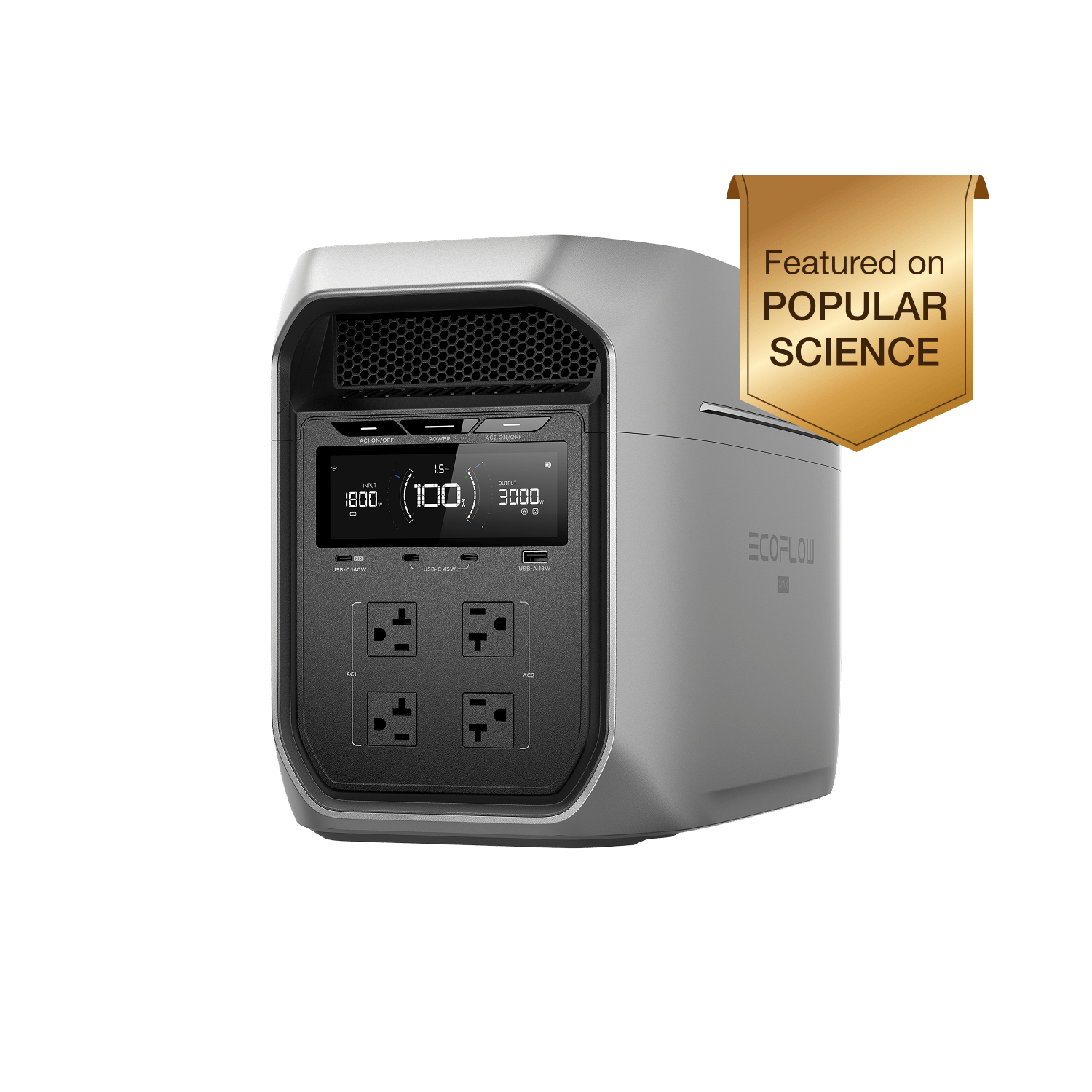
DELTA 3 Max Series Portable Power Station (2048Wh)
EcoFlow · $899
Buyers who want the highest continuous wattage for the money in the 2kWh class
What We Like
- 2400W continuous covers most single large appliances
- LiFePO4 chemistry rated for long cycle life
- Expandable with Max Plus add-on battery to 4kWh
Could Be Better
- 20.3kg is heavy to move between rooms
- List price is $1,199 -- $899 is a live sale price, not guaranteed
Key Specs
The best balance of capacity, output, and current price in the category.
See price at EcoFlow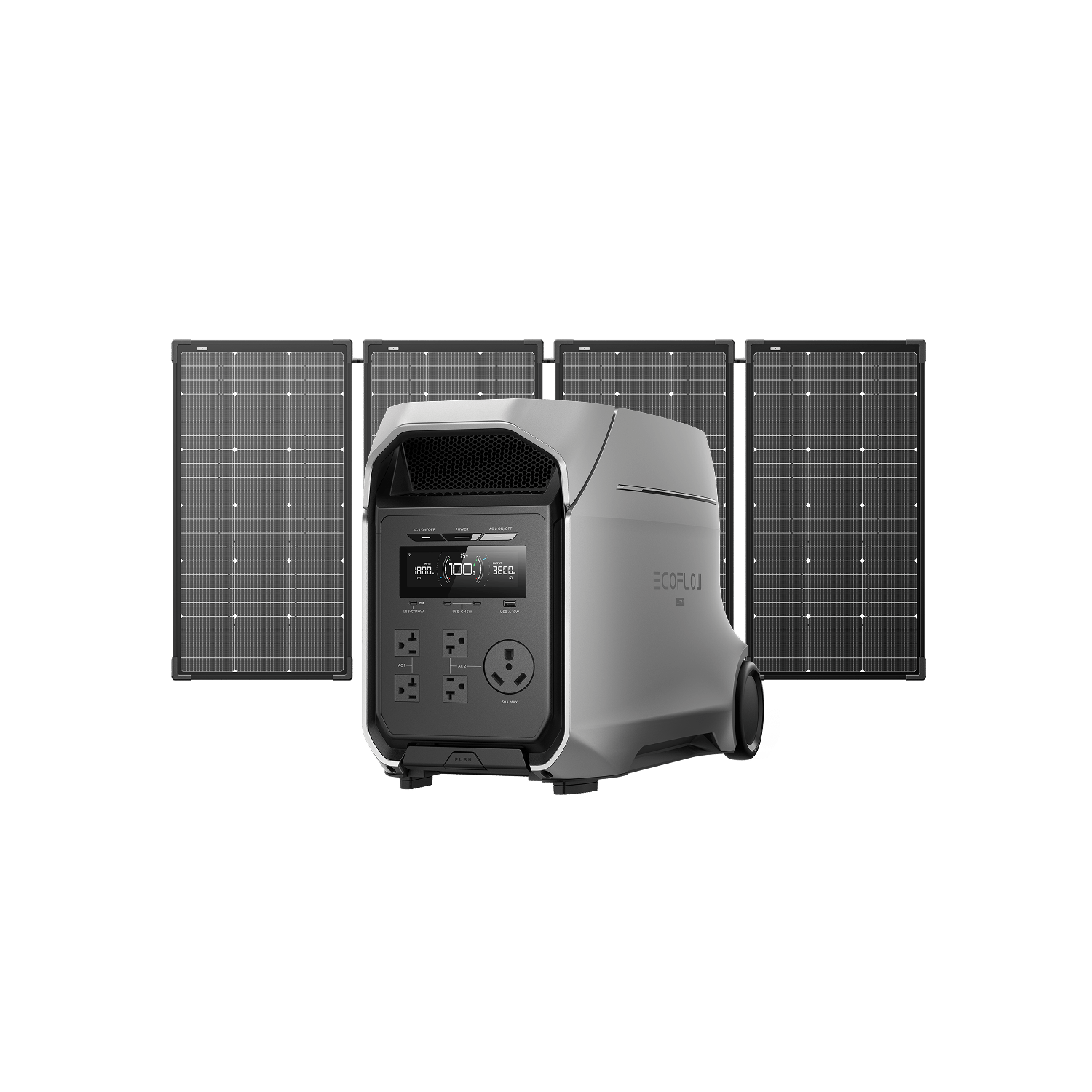
DELTA 3 Ultra Series Portable Power Station (3072Wh)
EcoFlow · $1,399
Buyers who need to run large appliances (well pump, central AC) during an outage
What We Like
- 3600W continuous / 7200W surge covers a well pump or central AC start
- Expandable to 11kWh, the highest ceiling in this comparison
- LiFePO4 chemistry
Could Be Better
- $1,399 is the most expensive unit in this roundup
- Overkill capacity for buyers who only need a few devices during an outage
Key Specs
The most headroom in the lineup if the budget allows for it.
See price at EcoFlow
Anker SOLIX S2000 Portable Power Station
Anker SOLIX · $649.99
Buyers who want the most capacity per dollar and don't need to expand later
What We Like
- $649.99 undercuts similarly-sized EcoFlow and Jackery units by hundreds
- 10,000-cycle LFP battery per Anker's own listing
- Lighter than the Goal Zero Yeti 1500X at a similar capacity
Could Be Better
- Explicitly NOT expandable with an add-on battery, unlike the EcoFlow and Jackery units here
- 1500W continuous will not run some window AC units or space heaters
Key Specs
The best price-to-capacity ratio here, if you don't need expandability.
See price at Anker SOLIX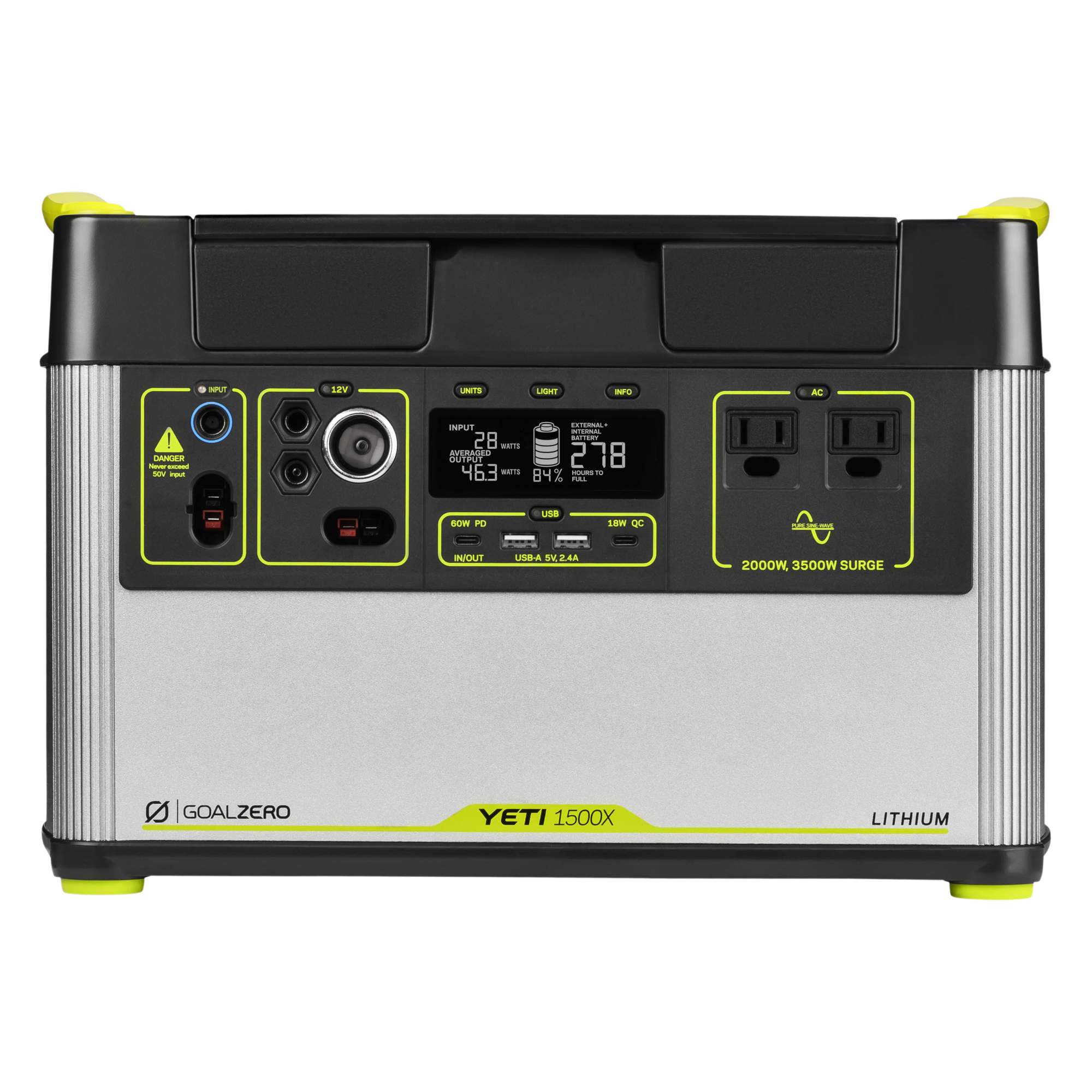
Yeti 1500X (Open Box)
Goal Zero · $974.97
Buyers comfortable with open-box condition and lower long-term cycle life in exchange for a lower price
What We Like
- Steep open-box discount off list
- 2000W continuous output
Could Be Better
- NMC chemistry rated for only 500 cycles vs 3,000-10,000+ for the LiFePO4/LFP units in this list, per each maker's own spec page
- Heaviest unit in this comparison at 45.64lb
- Open-box stock is limited and condition can vary
Key Specs
A real discount, but the one NMC holdout in a field of LiFePO4/LFP units -- know what you're trading for the price.
See price at Goal Zero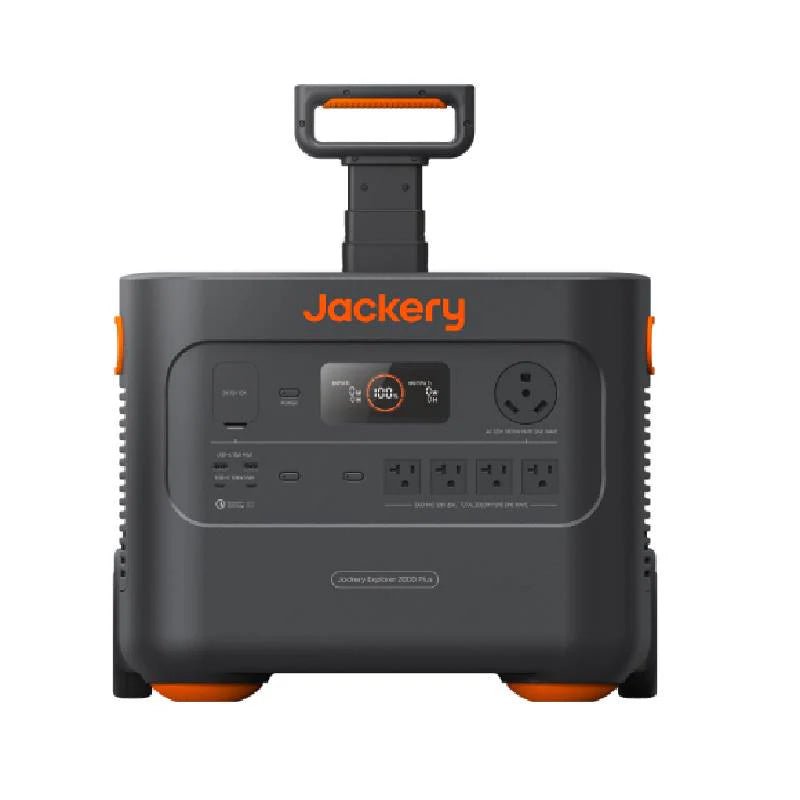
Jackery Explorer 2000 Plus Portable Power Station
Jackery · $1,219
Buyers already invested in or considering the Jackery ecosystem
What We Like
- Can be paralleled with a second unit for up to 6000W
- LiFePO4 chemistry
- List price is $1,429; $1,219 is a live discount
Could Be Better
- More expensive than the EcoFlow DELTA 3 Max at a similar capacity
- 6000W figure requires a second unit, not standalone
Key Specs
A solid flagship pick if brand ecosystem and parallel-unit scaling matter more than upfront price.
See price at JackeryProduct Comparison
| Product | Price | Rating | Reviews | Best For | Buy |
|---|---|---|---|---|---|
| DELTA 3 Max Series Portable Power Station (2048Wh) EcoFlow | $899 | 4.5 | — | Buyers who want the highest continuous wattage for the money in the 2kWh class | EcoFlow |
| DELTA 3 Ultra Series Portable Power Station (3072Wh) EcoFlow | $1,399 | 4.5 | — | Buyers who need to run large appliances (well pump, central AC) during an outage | EcoFlow |
| Anker SOLIX S2000 Portable Power Station Anker SOLIX | $649.99 | 4.5 | — | Buyers who want the most capacity per dollar and don't need to expand later | Anker SOLIX |
| Yeti 1500X (Open Box) Goal Zero | $974.97 | 4.5 | — | Buyers comfortable with open-box condition and lower long-term cycle life in exchange for a lower price | Goal Zero |
| Jackery Explorer 2000 Plus Portable Power Station Jackery | $1,219 | 4.5 | — | Buyers already invested in or considering the Jackery ecosystem | Jackery |
Get price-drop alerts and new guides from Outage Power Guide
One email a week: price drops on the gear we recommend, new guides, and what changed. No spam, unsubscribe anytime.